
Timber windows are one of the most beautiful features of a heritage home. They add charm, character, and a sense of history that modern aluminium frames simply cannot replicate. But if you live in a heritage property anywhere in Sydney, you have probably experienced one very familiar problem. The windows swell. They stick. They refuse to open after rain. Sometimes they expand so much that you feel like you are wrestling the frame just to get a bit of fresh air into the room.
Most people assume this is simply part of living in an older house. But when a timber window begins to swell, it is not a random event. It is your home telling you something. Swelling is often one of the earliest signs of moisture movement, failing paint protection, humidity buildup up or structural movement around the frame. While it may begin as something minor, ignoring it can lead to larger issues such as frame rot, water penetration, or complete loss of functionality.
Sydney’s climate makes heritage timber windows particularly vulnerable. Older homes in places like Balmain, Glebe, Newtown, Ashfield, Strathfield, and the North Shore were built long before modern ventilation and waterproofing standards. They were designed for natural airflow but now have to cope with today’s unpredictable weather, coastal humidity, and indoor heating. As a result, the timber responds quickly to changes in moisture. It expands, it contracts and eventually it begins to seize.
Understanding why the swelling happens is the key to solving it permanently rather than sanding the frame every summer and hoping for the best.
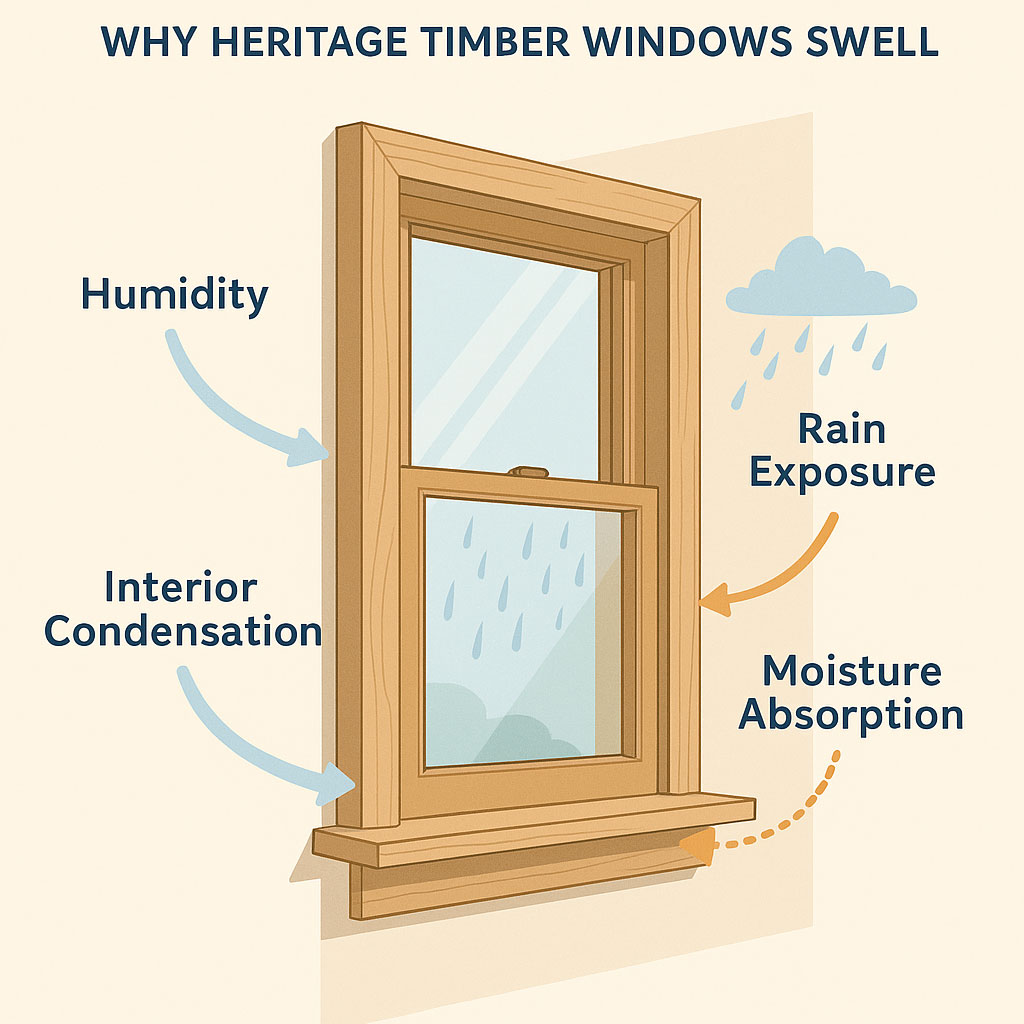
Why Heritage Timber Windows Swell
Timber is a natural material, so it constantly absorbs and releases moisture. This movement is normal, but in older homes, the changes can become extreme. When the timber absorbs more moisture than it can release, the fibres swell. This causes the sash to jam inside its channel or forces the casement window to press too tightly against the frame.
Humidity is one of the biggest triggers. During Sydney’s wet season, timber absorbs moisture from the air even if the window is fully closed. Homes near the coastline see this more often because sea air carries moisture deep into the timber fibres. If the paint system on the exterior has deteriorated, the timber absorbs even more water during rainfall. Over time, the protective layers break down, leaving the frame vulnerable to swelling, rot and decay.
Poor ventilation is another common factor. Many heritage homes have been renovated over the years, and new additions such as sealed bathrooms, modern kitchens and internal insulation can trap moisture indoors. When humidity builds up inside the home, the timber begins to react. This is very common in bedrooms, bathrooms and sunrooms where condensation forms regularly.
Then there is the problem of ageing. As timber windows approach several decades of use, the original putty dries out, the glazing becomes loose, and the frame begins to lose its shape. Any slight distortion of the frame places pressure on one part of the sash and can cause it to bind.
The last factor is structural movement. Heritage homes often experience natural settling, especially those built on reactive clay soils. When the walls shift even slightly, the window alignment changes. A once-perfect opening can become uneven, causing the sash to rub against one side.
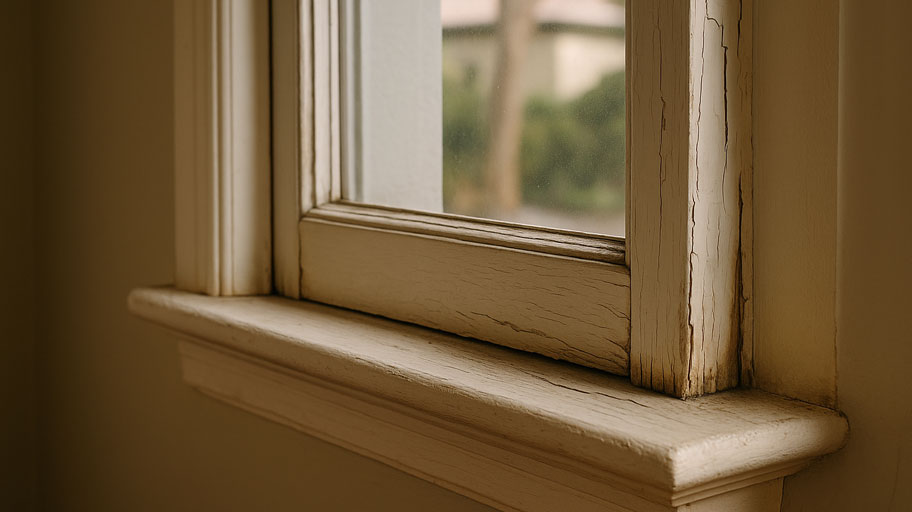
Early Signs the Window Is Swelling
Most homeowners notice the problem when the window becomes difficult to open. But there are earlier signs that the timber is absorbing moisture. A swollen window may show tiny cracks in the paint, especially near the bottom of the frame where water collects. The sill may begin to feel soft or spongy, and the timber may look slightly darker in areas where moisture has been absorbed. You might also notice condensation that lingers for longer than usual on the glass.
Inside the home, you may see paint peeling near the architraves or faint marks where water has migrated through the timber. These small signs appear long before the window becomes unusable. Addressing the issue at this stage is always easier and more cost effective.
Another indicator is seasonal performance. If your window works well in winter but jams in summer, the timber is reacting to humidity rather than structural movement. This is a strong sign that the timber needs proper sealing or weather protection.
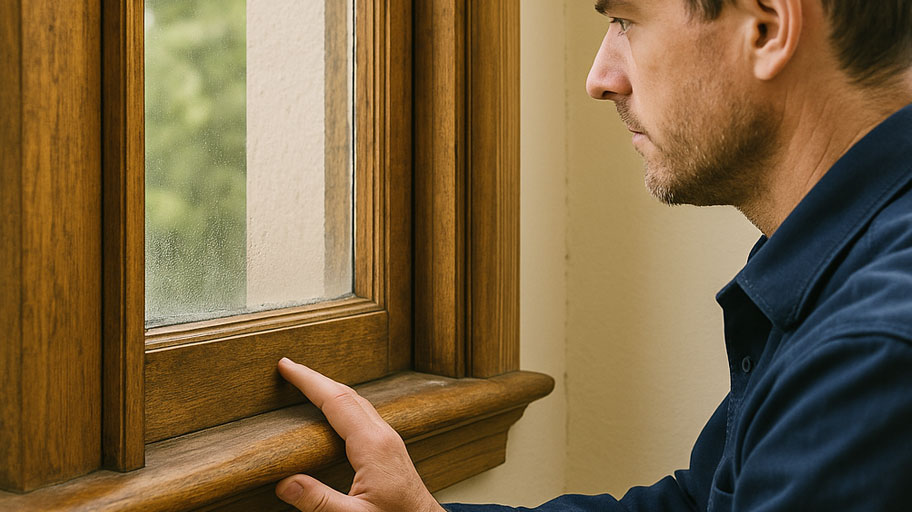
What Happens If You Ignore It
Many homeowners live with swollen windows far longer than they should. For a while it may seem harmless, but the long term effects can be significant. Constant moisture absorption leads to timber rot, which weakens the frame and allows water to enter the wall cavity. Once moisture enters the wall, it can cause mould growth, paint damage and even structural issues.
A severely swollen sash can also break the cords or strain the hinges, creating a safety issue. In casement windows, hinges may bend under the pressure, causing the window to sag and no longer close properly. Heritage window repairs can escalate quickly if these early signs are ignored.
If swelling is caused by insufficient drainage or poor weatherproofing, water may be tracking into the building envelope. This is a remedial construction issue rather than just a cosmetic annoyance. You can explore this in more detail on the Remedial Building page.
How to Properly Fix Swollen Heritage Windows
The solution depends on what is actually causing the swelling. Sanding the edge of the sash is only a temporary fix if the underlying moisture issue remains. A proper repair begins with identifying whether the swelling is coming from humidity, poor weatherproofing, structural movement, or paint failure.
The first step is a detailed inspection. A professional heritage builder will examine the window frame, sill, glazing putty, paint system, and surrounding structure. Moisture meters are often used to check how deeply moisture has penetrated. The alignment of the window is also measured to see whether the frame has moved.
If humidity is the primary cause, improving ventilation may be enough to reduce swelling. This could involve adding trickle vents, improving air flow, or adjusting how the home is heated during winter. In some cases, the interior face of the window may need a breathable sealant to help regulate moisture transfer.
If the paint system has failed, the solution involves stripping the damaged paint, repairing any soft timber, and applying a breathable exterior paint designed for heritage windows. It is important that the paint does not trap moisture inside the timber, as this will cause swelling to worsen.
Where the swelling is caused by external water exposure, the frame may require new putty, silicone joints, or flashing. Ensuring the sill angles properly away from the house also plays a key role in preventing water from sitting against the timber.
If structural movement is the culprit, the window may need to be realigned or the frame rebuilt. This is more complex and falls into the remedial construction category. Older homes with movement often require a combination of window restoration and structural adjustment. You can learn more about this type of work through our Heritage Restoration section.
Once the cause of swelling is addressed, the final step is a proper restoration. This usually includes sanding any swollen areas, replacing failing components, reglazing where needed, and applying protective coatings. A restored heritage window should operate smoothly throughout the year with no sticking, binding,g or seasonal swelling.

Preventing Future Swelling
The best long term protection is proper maintenance. Heritage timber windows need to breathe, and they perform best with high quality paint systems and adequate ventilation. Regularly checking putty, seals and paint condition helps prevent moisture build up. Ensuring the home has good airflow also makes a significant difference.
If your home is in a coastal suburb where salt exposure is high, more frequent inspection is recommended. Salt accelerates the breakdown of paint systems, which allows more moisture to enter the timber.
When It Is Time to Restore Rather Than Repair
There comes a point where quick fixes are no longer enough. If the timber has softened, the joints have loosened or the frame has moved significantly, a full restoration is the only realistic solution. Restorations are especially important for heritage listed homes where the appearance and material integrity must be preserved.
A full restoration includes removing decayed timber, rebuilding frame components, reglazing, repainting and ensuring the window meets heritage guidelines. This type of work should always be handled by professionals who understand conservation standards. Ardent Construction offers heritage compliant restoration solutions that respect the original structure while improving performance for modern living.
Swollen heritage timber windows are far more than an annoyance. They are an early warning sign of issues that can affect the long term health of your home. Understanding why swelling occurs is the first step toward solving it properly. With the right approach, your timber windows can operate smoothly, look beautiful and last for decades.
Explore our heritage services here:
https://www.ardentconstruction.com.au/heritage/
Or reach out for a detailed assessment tailored to your home.